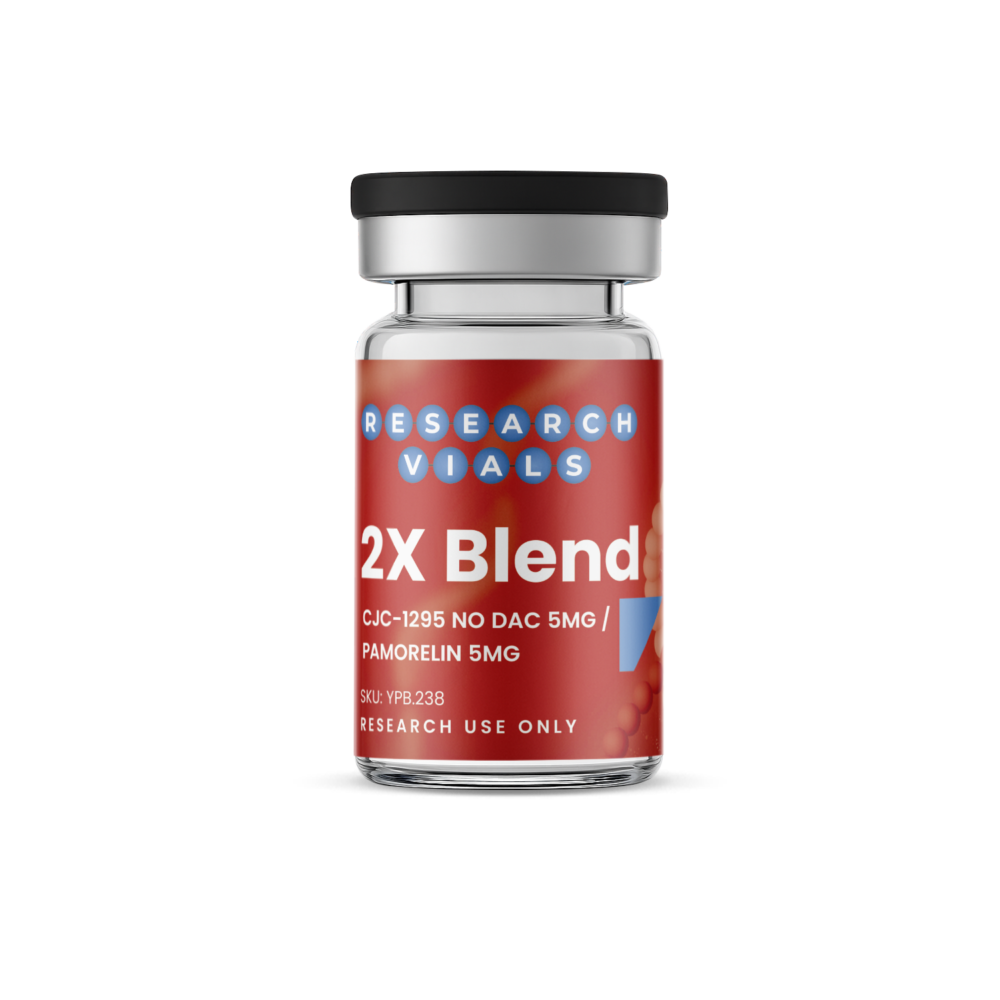

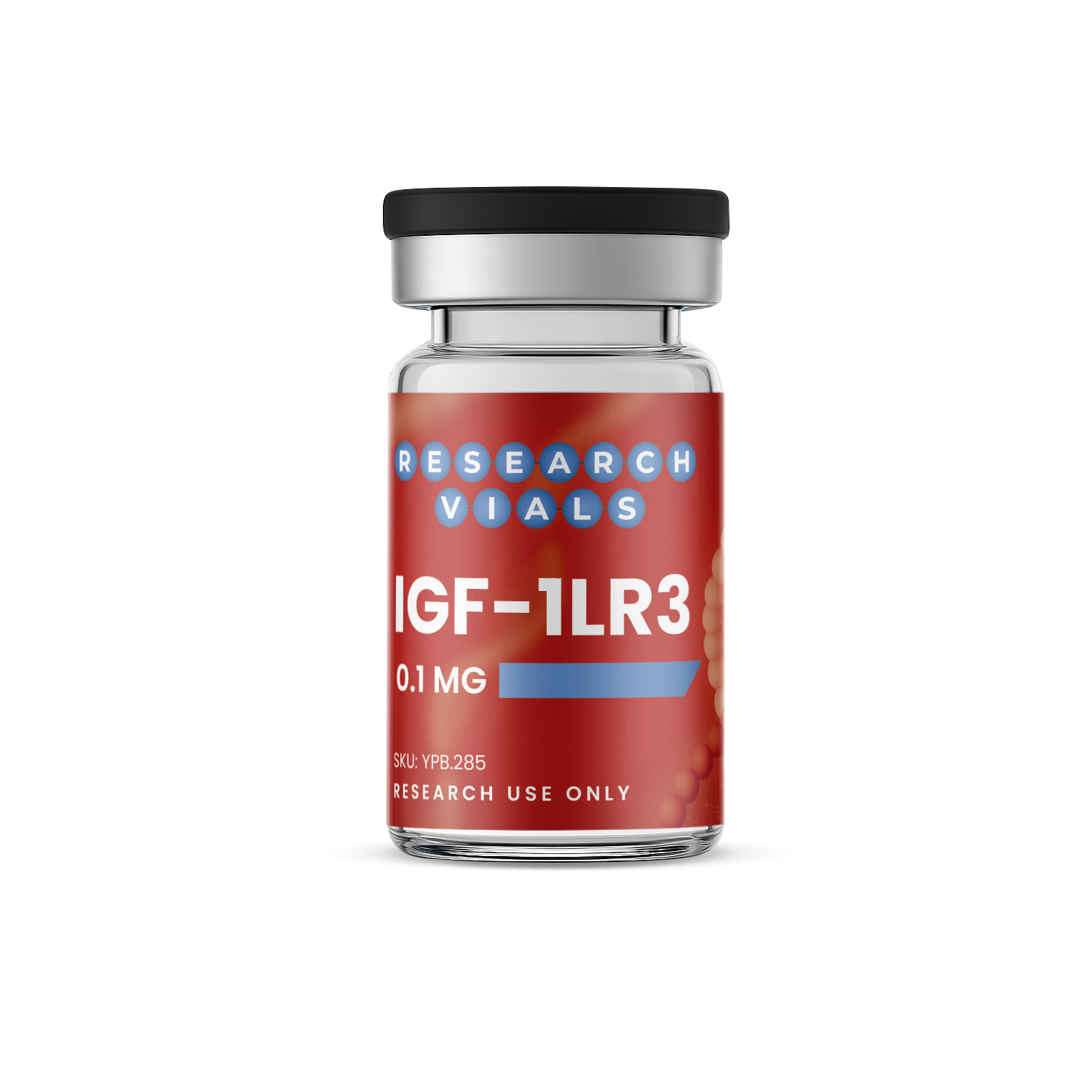
GHRP-6 Acetate (5mg)
$100.00
Additional information
| Weight | 0.0625 lbs |
|---|
Storage Instructions
All products from Research Vials are manufactured using a lyophilization (freeze-drying) process. This method is designed to maintain product integrity and allows vials to remain stable during shipping for approximately 3–4 months.
Once a vial is reconstituted with bacteriostatic water, it should be stored in the refrigerator to help maintain stability. Under these conditions, reconstituted material is generally considered stable for up to 30 days.
Lyophilization is a dehydration technique in which compounds are frozen and then exposed to low pressure. This causes the water in the vial to sublimate directly from solid to gas, leaving behind a stable, crystalline white structure. This powder can be kept at room temperature until reconstitution.
Upon receipt, products should be stored away from heat and light. For short-term use, refrigeration at approximately 4°C (39°F) is suitable. For long-term storage (several months to years), vials may be placed in a freezer at approximately -80°C (-112°F). Freezing is the preferred method for preserving product stability over extended periods.
⚠️ Important Notice:
These products are intended for research use only. Not for human consumption.
Research Use Only
These studies reference research-grade peptides for laboratory and scientific investigation only. Not for human consumption. Not intended to diagnose, treat, cure, or prevent any disease.
Published Scientific Research
Peer-reviewed laboratory research investigating growth hormone peptides from leading scientific databases
The role of protein kinase C and its effect on GHRH in the regulation of hormone secretion by somatotrophinomas.
Phorbol ester-induced release of growth hormone (GH) and prolactin (PRL) from human somatotrophic tumors was examined in vitro. 12-O-tetradecanoyl-phorbol-13-acetate (TPA) strongly stimulated GH and PRL secretion and showed an additive effect on GH secretion if used in combination with GH releasing hormone (GHRH).
View Full StudyThe effect of GHRP-6 on the intracellular Na+ concentration of rat pituitary cells in primary culture.
The objective of the present study was to further investigate the ionic mechanism of the action of GHRP-6 on male rat pituitary cells in culture. It is generally accepted that Ca2+ and protein kinase C but not cAMP are involved in the signal transduction pathway of the action of GHRP-6.
View Full StudySecretory mechanisms of growth hormone (GH)-releasing peptide-, GH-releasing hormone-, and thyrotropin-releasing hormone-induced GH release in patients with acromegaly.
3), GHRP plus forskolin (adenylate cyclase activator), but not GHRP plus phorbol 12-myristate 13-acetate (protein kinase C activator), additively enhanced the GH response. Nordihydroguaiaretic acid (NDGA; inhibitor of arachidonic cascade) inhibited GH release induced by GHRP, TRH, GHRH, TRH plus GHRH, or GHRP plus GHRH, but did not inhibit basal GH secretion.
View Full StudyEvidence for a role of protein kinase-C in His-D-Trp-Ala-Trp-D-Phe-Lys-NH2-induced growth hormone release from rat primary pituitary cells.
This study was undertaken to further investigate the mechanism of action of GHRP-6 on GH release, particularly the involvement of protein kinase-C. Extracellularly added phospholipase-C not only stimulated GH release in a dose-dependent manner, but also potentiated GRF-induced GH release.
View Full StudyRelated products
-
-
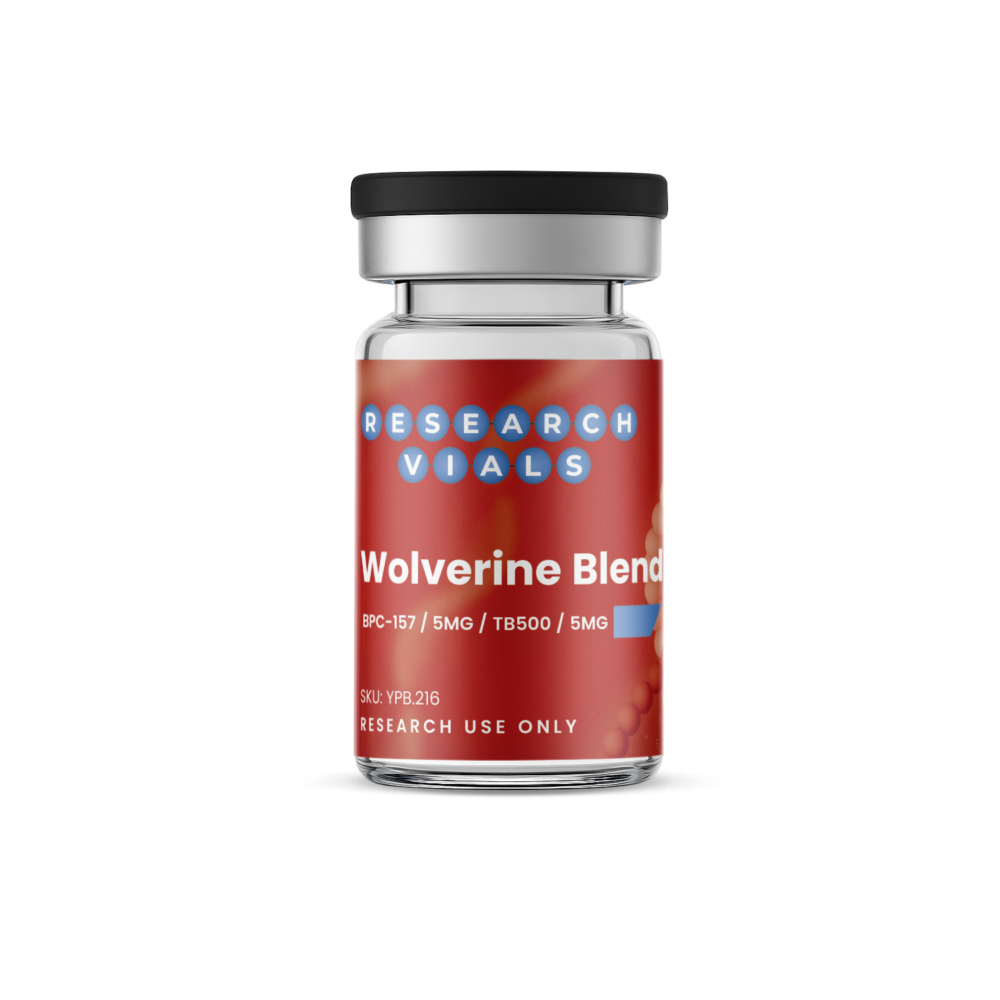
Wolverine Blend – BPC-157 (5mg) / TB500 (5mg) (Globally Sourced)
Price range: $56.00 through $90.00Select options This product has multiple variants. The options may be chosen on the product page -